
Introduction: Organizational Acumen

Welcome to this month's Manager's Lab content! This month we're tackling organizational acumen.
This topic is so critical that most professional management certifications encompass it; SHRM includes it in their Body of Knowledge & Skills model, and PMI includes it in their Talent Triangle. (Both orgs call it "Business Acumen", but for the purposes of Manager's Lab, we'll call it "Organizational Acumen", knowing that many of the same ideas are applied beyond businesses.)
At its core, organizational acumen is about understanding your environment well enough to make good decisions – which, of course, begs the question: what's a good decision? A good question unto itself. So let's break it all down:
1. Map your organization's value narrative, and articulate clearly where your team (and you!) fit into it
2. Identify the financial, impact, and external orientations at play in any stakeholder conversation -- and communicate strategically across all three
3. Apply the organizational acumen loop to a real decision or stuck conversation from your own leadership experience
As always, we'll divide this content into four "chunks" using our Manager's Lab Growth Framework:
Step 1: Gain Knowledge
Step 2: Develop Your Theory of Change
Step 3: Hone Your Management Theory of Change
Step 4:Practice!
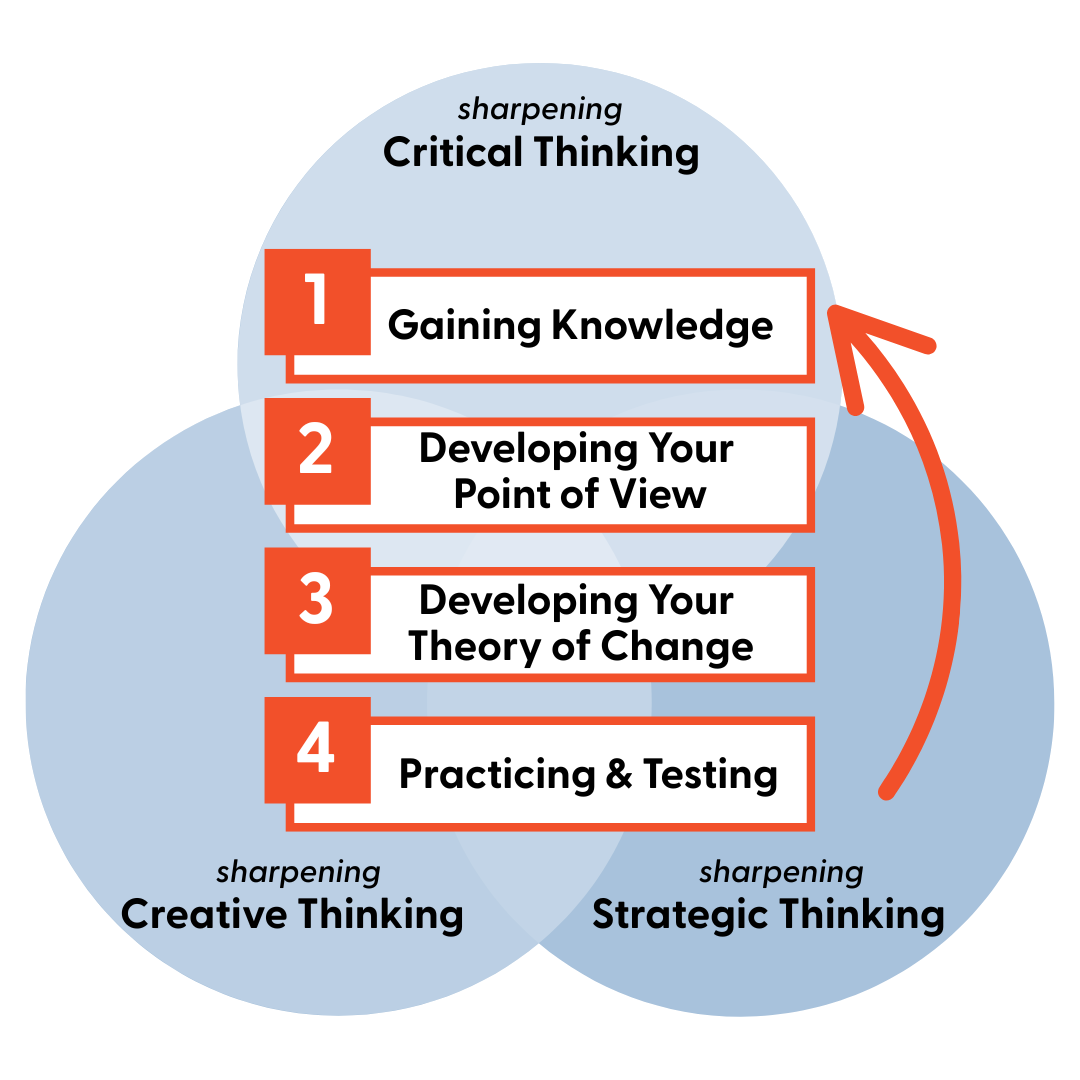
Step 1: Gain Knowledge. As always, this is no-fluff — we think it’ll take you about 30 minutes. If you can, we recommend reading over this section early on in the month so you have lots of time left over to practice.
Step 2: Develop your Point of View. Second, a check into your point of view. How does what you’ve learned this month fit into your point of view? Does it challenge anything you’ve already thought? Does it sharpen or clarify anything? What does it enrich
Step 3: Develop your Management Theory of Change. Next, we’ll look at your management theory of change. How does this change how you think about and communicate the “point” of management? How does THAT change impact how you talk to stakeholders? (Above, lateral, who you serve… the whole nine.)
Step 4: Practice! Often, the practice activities will feel pretty intuitive, and sometimes, you’ll have ideas for how to implement what you’re learning before you’ve even finished the material! In case you get stuck (or if you’re the sort of person who loves structure), we’ve put together some activities that will be a great jumping-off point as a manager and organizational leader to put what you’ve learned into practice.
So, without further ado… let’s get started!
Member discussion